
My approach
Careful, collaborative, and honest about fit.
Good therapy isn't rushed, and it isn't done to your child from behind a clinic door. Here's how I work: a clear path from your first concern to a plan that fits, with you in the room the whole way.
How I work
Four steps, never rushed.
Every family starts the same way. You'll always know where we are and what comes next.
Listen first
We start with your concerns and hopes, your child's history, and what daily life actually looks like. I want the full picture, in your words, before I reach for a single test.
Assess with care
Online standardized testing paired with clinical observation and a parent interview. You get a clear written report you can keep and share, and a conversation to walk through what it means.
Honest guidance
A straight recommendation based on what I actually find, including when therapy isn't the right call, or when your child would be better served another way. Good fit matters more than a full schedule.
Walk it together
If therapy is the right step, we build a plan around your child's interests and needs, and I coach you along the way, so the skills carry over into everyday life and progress keeps going between sessions.
Why teletherapy works
The worries are fair. Here's the reality.
Most families arrive with the same honest questions about online therapy. These are the ones I hear most, and what 17+ years and a lot of sessions have shown me.
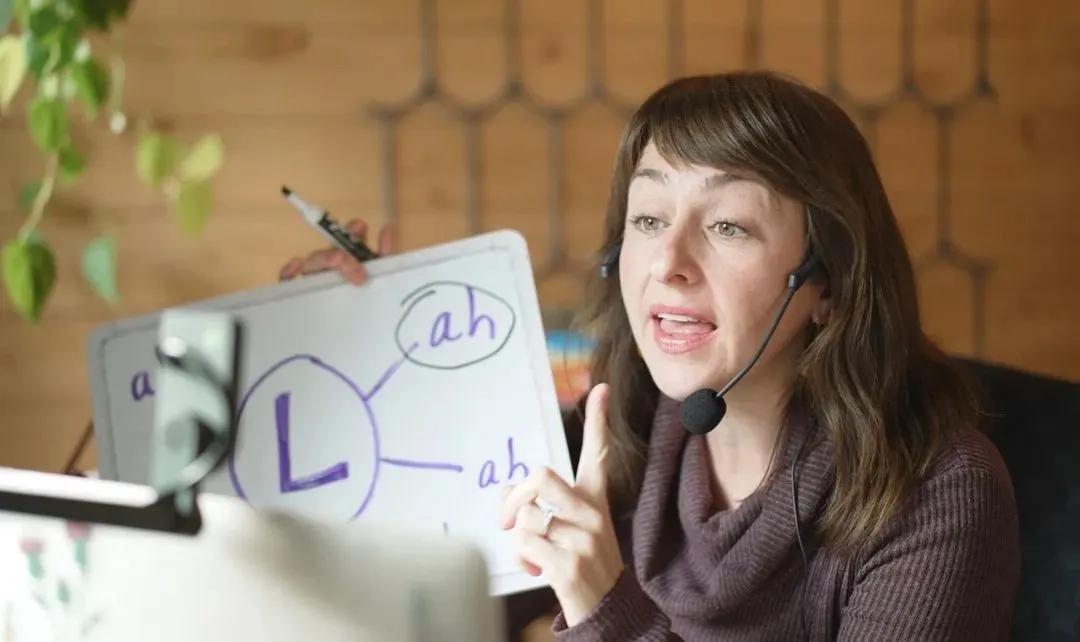
"My child won't pay attention to a screen."
Attention isn't binary.
Full-screen attention was never the goal. Engagement is, and I design sessions around it, using movement, play, and the things your child already loves.
"Therapy at home isn't 'real' therapy."
Home is a clinical asset, not a compromise.
The place your child is most themselves is the place skills actually stick. Working in their own space, with their own things, is the advantage, not a trade-off.
"A snow day or a sick day means a lost week."
Disruptions become opportunities.
A snow day is a chance for teletherapy, not a cancellation. Because we meet online, the little interruptions of real life derail us far less often.
"I'll be on the sidelines while someone works with my child."
The screen is a window, not a wall.
You're in the room. I can see your child's world and coach you in the moment, so you leave every session with something to carry forward.
Is it right for your child?
An honest read, before anything else.
Teletherapy isn't right for every child, and I'd rather tell you that up front than six weeks in. The free Meet & Greet is exactly where we sort this out, together.
Often a great fit when…
- A caregiver can be nearby to help, especially with younger children
- You want to be involved and coached, not just handed a report
- Flexibility and staying in your child's own environment matter to you
- You're in Washington, Vermont, Virginia, or Massachusetts
Let's talk it through when…
- Some needs are better served in person, and I'll say so honestly
- You're not sure your setup at home will work, we can figure it out
- You've tried therapy before and it didn't click, tell me what happened
If teletherapy isn't the right fit, I'll help you find what is. That promise is the whole point of starting with a free conversation.
Ready when you are
Let's figure out the right next step, together.
A free 20-minute Meet & Greet is the honest way to start. We'll talk through your child, your questions, and whether this is a good fit, no cost and no pressure.
Schedule a free Meet & Greet